I have to return some videotapes
An emergency kit for humanity
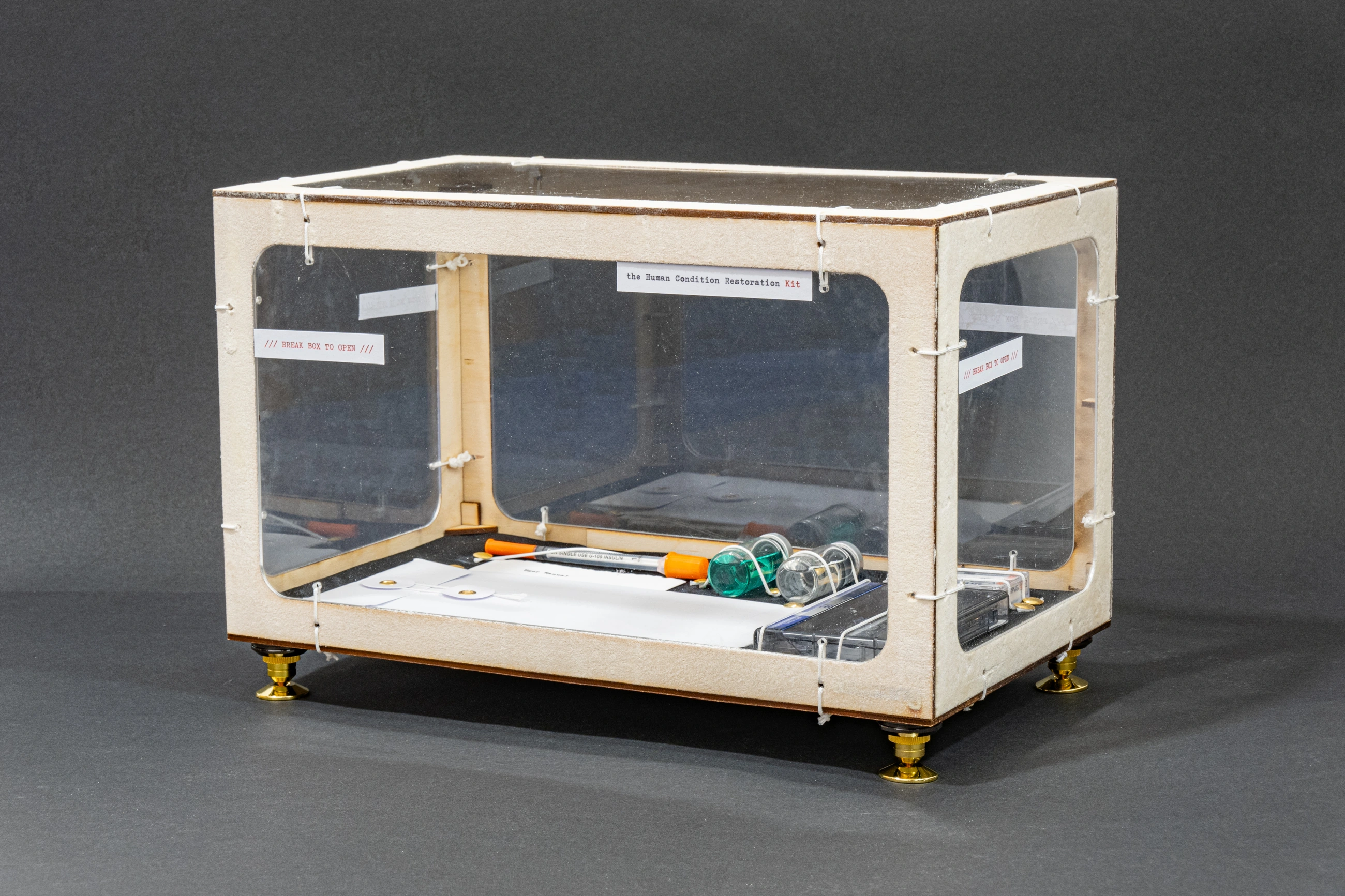
An emotion kit for a future increasingly lived through digital platforms. I Have to Return Some Videotapes brings analogue objects into a sealed case, asking what we lose when everyday actions become effortless.
- Type
- Speculative design / emotion kit
- Research
- Two weeks without smart devices
- Materials
- Wood, transparent panels & flour coating
- Year
- 2024
Two weeks in analogue
For two weeks, I stepped away from smart devices and used physical tools for everyday tasks. Typing, listening and finding my way became slower, more deliberate experiences.
A letter takes time
Letters made communication tangible: gathering addresses, choosing paper, typing, sealing an envelope and waiting for a reply. These small acts of preparation helped shape the kit’s focus on effort and anticipation.
Everyday life, recorded
The photographs also record the everyday setting of the experiment: cooking, shared meals, music and conversations. A small tape recorder and a film camera offered physical ways to keep those moments.
From observation to object
Handwritten notes brought together conversations, observations and early ideas. I explored how the effort within an action could become part of a designed object, rather than something to remove.
The effort is the experience
I began by living without modern smart devices for two weeks. Writing letters, using a typewriter and waiting for things to arrive made me notice the time between an action and its outcome. The attraction was not simply to old objects, but to the effort, anticipation and memories surrounding them.
Small acts of care
The kit gathers blank cassette and microcassette tapes, an envelope, paper for addresses and phone numbers, and an instruction manual. A painkiller, a “secret potion” and a syringe form part of its speculative emergency-kit language. Together, these objects invite physical acts of recording, writing and remembering.
Break it to begin
The case has no ordinary opening: it must be broken to reach the contents. That deliberate obstacle makes access a decision rather than an automatic gesture. The effort of opening becomes the first experience the kit asks its owner to remember.
Making the frame
I experimented with a traditional Swedish flour-based wood coating, applying eight coats and testing the finish in rain. Nails and screws hold the frame together with minimal adhesive, leaving the materials and the way they meet visible.